
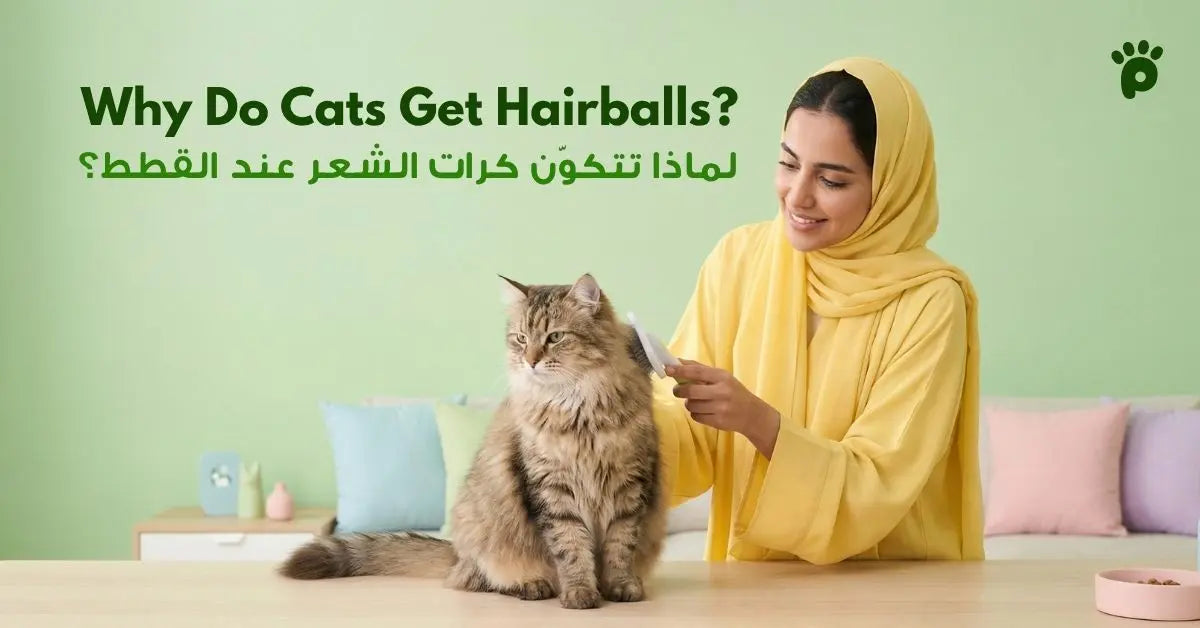
Why Do Cats Get Hairballs? A Practical Guide for Cat Owners in Saudi Arabia
Hairballs are one of the most common issues cat owners deal with, especially if their cat grooms heavily, sheds often, or has a longer coat. While the occasional hairball can happen, frequent vomiting, repeated gagging, or visible discomfort usually means it is time to improve your cat’s daily routine.
This guide explains why hairballs happen, what helps reduce them, and when cat owners should pay closer attention.
What causes hairballs in cats?
Cats clean themselves by licking their fur, which means they swallow loose hair every day. Some of that hair passes normally through the digestive system, but when too much builds up in the stomach, it can form a hairball.
Hairballs are usually more common in:
- Long-haired cats
- Cats during seasonal shedding
- Cats that groom very often
- Cats with digestive sensitivity
Signs your cat may need extra hairball support
- Frequent gagging or retching
- Vomiting hair or foam
- Visible discomfort after grooming
- Heavy shedding
- Irregular appetite during hairball episodes
If symptoms are frequent or severe, a veterinary check is the safest next step.
How to help reduce hairballs at home
A better hairball routine usually starts with simple daily habits:
- Brush your cat regularly to reduce loose hair
- Keep fresh water available every day
- Support healthy digestion through a consistent feeding routine
- Pay closer attention during seasonal shedding periods
Why grooming matters more than most owners think
One of the easiest ways to reduce hairballs is to remove loose fur before your cat swallows it. Regular brushing can make a noticeable difference, especially for long-haired cats and cats that shed heavily.
Even short-haired cats can benefit from routine grooming, particularly during warmer months or seasonal coat changes.
Does hydration help with hairballs?
Yes, hydration can play an important role in overall digestive comfort. Cats that do not drink enough water may need more support through their daily routine. Making sure your cat always has access to clean water is a simple but important step.
When are hairballs considered too frequent?
An occasional hairball can happen, but repeated episodes should not be ignored. If your cat is gagging often, vomiting frequently, or showing signs of discomfort without producing a hairball, it is better to speak with your veterinarian.
This is especially important if you notice:
- Loss of appetite
- Lethargy
- Constipation
- Repeated vomiting in a short period
What is the best routine for cats prone to hairballs?
For cats that deal with hairballs regularly, consistency matters more than quick fixes. A simple routine often works best:
- Regular brushing
- Daily hydration support
- A feeding routine that suits your cat’s needs
- Extra care during periods of high shedding
Final tip
Hairballs may be common, but they should not become a normal part of your cat’s life without attention. The right routine can help reduce discomfort and support better daily wellbeing.
If your cat gets frequent hairballs, start with grooming, hydration, and consistency. Small changes can make a real difference over time.